What Is The Key Money Laundering Risk
Money Laundering Risk in Banking Institution The Financial Action Task Force on Money Laundering FATF which is recognized as the international standard setter for anti-money laundering efforts defines the term money laundering as the processing of criminal proceeds to disguise their illegal origin in order to legitimize the ill-gotten gains of crime. The EBA highlights key money laundering and terrorist financing risks across the EU 03 March 2021 The MLTF risks identified by the EBA include those that are applicable to the entire financial system for instance the use of innovative financial services while others affect specific sectors such as de-risking.

Anti Money Laundering Aml Ranks As One Of The Top Priorities Of Banks Worldwide Regulatory Age Evaluation Employee Money Laundering Employee Evaluation Form
One of the key requirements of the FATF Recommendations is for countries to identify assess and understand the money laundering ML and terrorist financing TF risks that they are exposed to.

What is the key money laundering risk. The money laundering risk base approach and its key components All parts of the question can be answered in relation to a jurisdiction with which you are familiar. So the key here is to understand that money laundering risk is about where the money came from whereas fraud risk or credit risk is about whether the money is really there. With regulators adopting stricter norms on financial transactions and increasing their enforcement efforts institutions are facing increased complexity on customer.
The challenge is even greater for complex institutions that operate across several lines of business IT systems and business cultures. In recognition of the fact that pre-paid cards are now widely used for financial crime and terror attacks the new fifth money laundering directive requires customer due diligence to be conducted to identify holders of pre-paid cards at a reduced threshold of 150 or more and any remote payment transactions over 50. Globally governments have narrowed key risk indicators to five primary divisions of 1 Nature size and complexity of a business 2 Customer types including B2B and B2C 3 the types of products and services provided to customers 4 method of on-boarding new customers and ongoing communications with existing customers and finally 5 Geography risks.
Financial institutions face the challenge of addressing the threat of money laundering on multiple fronts. Generally money launderers tend to seek out countries or sectors in which there is a low risk of detection due to weak or ineffective anti-money laundering programmes. Simply put the risk-based principle requires financial institutions to assess the risks associated with illicit activities such as money laundering and terrorist financing that they may face in order to reasonably deploy corresponding resources before taking prioritized control measures as a response to these risks.
Money laundering and terrorist financing through the real estate sector and the Guidance on the risk -based approach for real estat e agent s issued in 2007 and 2008 respectively address the real estate sectors vulnerability to money laundering. The National Crime Agency NCA believes that there is a realistic possibility that money laundering is in the hundreds of billions of pounds annually. Anti-Money Laundering Toolkit.
Our quick guide gives you an overview of the key issues firms need to be aware of as a result of the transposition of the Fourth EU Money Laundering Directive. A recent joint report between the FATF and the Egmont Group outlines three main risk indicators for trade-based money laundering. AML risk and the risk-based approach.
Trade document and commodity risk. Because the objective of money laundering is to get the illegal funds back to the individual who generated them launderers usually prefer to move funds through stable financial systems. Money laundering underpins and enables most forms of organised crime allowing crime groups to further their operations and conceal their assets.
Once these risks are properly understood countries will be able to implement anti-money laundering and counter terrorist financing measures that mitigate. What are the key risk indicators for money laundering. The Money Laundering Terrorist Financing and Transfer of Funds Information on the Payer Regulations 2017 MLR 2017 came into force in June 2017.
By passing money through complex transfers and transactions or through a series of businesses the money is cleaned of its illegitimate origin and made to. You can decide which areas of. Money laundering is a process that criminals use in an attempt to hide the illegal source of their income.
Businesses regulated by the Money Laundering Regulations must assess the risk that they could be used for money laundering including terrorist financing. Fraud professionals see activity like this all the time and if they were to ask a few more questions it could help protect the organization from money laundering and terrorist financing. The name of the jurisdiction you have selected should be clearly stated in your answer.

Infographic Money Laundering Is The Process By Which Criminals Conceal The Original Source Of Money To Make It Appear As It S Been Earned Via A Legitimate

Evaluating The Risk Based Approach Acams Today
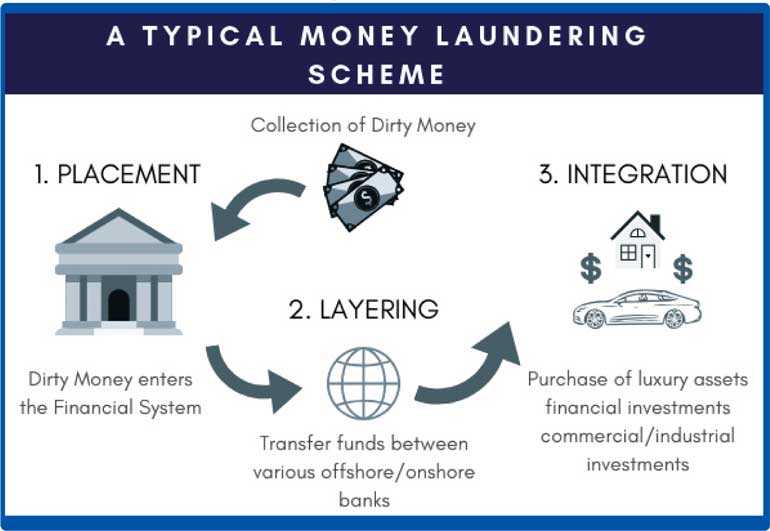
Understanding The Risks Of Money Laundering In Sri Lanka Daily Ft

Anti Money Laundering Software Market Size To Cross 2 Billion By 2025 Money Laundering Latest Technology Updates Technology Updates

Anti Money Laundering Infographic 2014 Money Laundering Infographic Risk Management

How Banks Can Solve The Anti Money Laundering Challenge Money Laundering Solving Challenges

Anti Money Laundering Where Are We And Where Do We Go From Here
Pin Auf Infographic

The Symbol Of Offshore Investments Financial Crimes And Money Laundering Money Laundering Notes Online Photo

Infographic Anti Money Laundering Money Laundering Accounting Humor Money

Key Concepts E Kyc Procedures And A Checklist For Your Business Know Your Customer Knowing You Customer Retention

Combating Money Laundering In The Context Of Financial Market Supervision
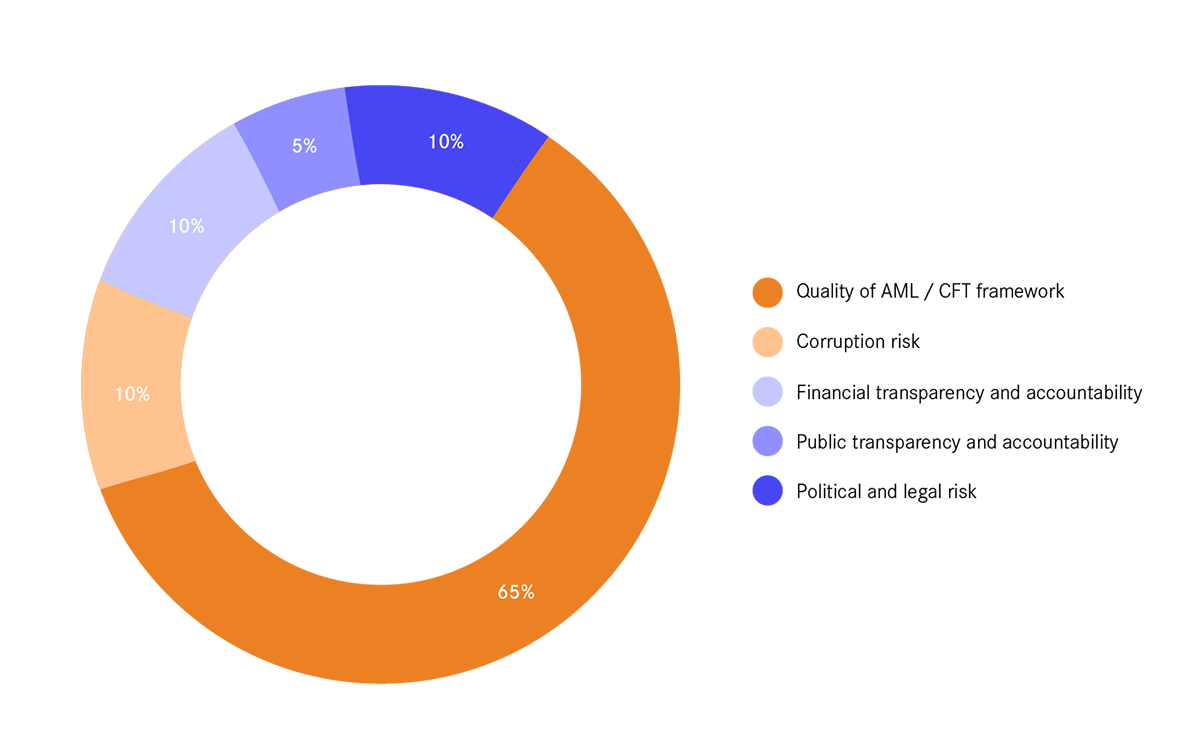
Methodology And Data Basel Institute On Governance
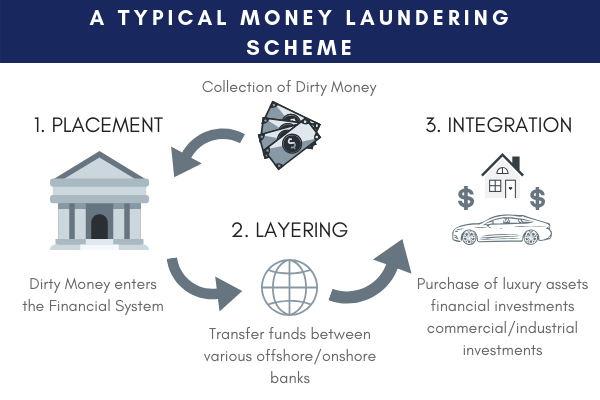
Understanding The Risks Of Money Laundering In Sri Lanka The Lakshman Kadirgamar Institute

Eu Policy On High Risk Third Countries European Commission

Get An Overview Of Fincen And Fatf Requirements And Learn How To Perform High Risk Customer Reviews That Have Tangible Benefits High Risk Money Laundering Risk

Methodology And Data Basel Institute On Governance

Special Report Anti Money Laundering Aml The Focus On Anti Money Laundering Has Never Been More Acute In This Aml Roundta Money Laundering Anti Strengthen

Infographic Of Anti Money Laundering Aml Analysis Raconteur Net Money Laundering Finance Infographic Infographic

Post a Comment for "What Is The Key Money Laundering Risk"